Tuesday, October 4, 2016

Smoke Signals (1998) and Environmental Adaptations


After watching Charlie's Country (2013) about aboriginal journeys,  Smoke Signals came to mind. In Smoke Signals, the so-called ecological Indian faces neither banishment nor annihilation because he adapts the hell of both the reservation and the wider Euro-centric world into a home. By translating four of a series of disjointed and primarily bitter stories from The Lone Ranger and Tonto Fistfight in Heaven into a filmic collaborative journey with what he calls “integrity,” Sherman Alexie has constructed a narrative of environmental adaptation with a clear and cohesive structure that follows an evolutionary pattern focused on place. Characters in Smoke Signals embrace a focus on “adapting themselves to their circumstances in every possible way” while the film adds the element of ecology and emphasizes a relationship between human and nonhuman nature through Victor Joseph (Adam Beach) and Thomas Builds-the-Fire (Evan Adams) journey toward Mars, Arizona, where Victor’s father’s ashes remain.
To build this narrative, the film follows a three-act narrative grounded in ecology:
  • Establishing the reservation as an inhospitable setting for human and nonhuman nature.
  • Leaving the reservation on a journey of landscapes.
  • Returning to the reservation able to transform hell into a home.


The Reservation as Hell on Earth
The reservation’s ecology seems less than life sustaining during the film’s first act. Social images of reservation life highlight some of the real economic, environmental, and social problems still prevalent for American Indians. In one scene, for example, we see a drunken Arnold Joseph (Gary Farmer), Victor’s father, who stumbles out of his house, throwing firecrackers to prolong the celebration. Beer cans and fireworks cover the lawn. The party is over, but Arnold fires a roman candle into the house, and the curtains and living room furniture burst into flames. Thomas’ voice tells us that the “fire swallowed up my mother and father,” but Arnold catches an infant thrown from an upper story window, saving it from the raging fire. It is Thomas, and Arnold places him in the arms of his grandmother (Monique Mojica). When the grandmother thanks him, he says he 
“didn’t mean to,” a sign of the guilt he will carry that the father validates when he cuts his hair and, as Thomas states, “practiced vanishing.” Thomas and Victor have almost literally been “born of flame and ash” on a reservation where the only hope seems to be survival. 
A Journey of Landscapes
The opening act closes when Victor and Thomas consult with their mother figures and move closer to their journey to retrieve Victor’s father’s ashes. Although Victor bears his pain in isolation, Thomas helps his grandmother make fry bread, illustrating the communal strength on which environmental adaptation can be built. Victor associates fry bread with relationship building when he hugs his mom and compliments her on her bread, the best on the reservation. As Arlene explains, “I don’t make it by myself,” Arlene tells him. “I got the recipe from my grandmother and she got it from her grandmother, and I listened to people,” she says, showing him how building a new and better life—or fry bread—requires a collective process. When the two arrive in their father’s valley, his friend Suzy Song (Irene Bedard) continues this communal approach by offering Victor his father’s ashes. Thomas amplifies the connection with a story about Victor’s mother feeding a hundred hungry American Indians with fifty pieces of fry bread, a clear reference to the loaves and fishes parable from the Sermon on the Mount and interconnected relationships.
Transforming Hell Into a Home
One last conflict moves Victor and Thomas toward environmental adaptation and serves as the entrance into the third act of the film. While fighting over visions of Victor’s father, Victor and Thomas crash Arnold’s truck, avoiding a car parked in the middle of the highway. They turn what could be a dangerous altercation with police “off the Rez” into a triumph, changing Arnold’s past crimes into communal solutions. Instead of leaving the scene and avoiding a confrontation with police, Victor helps an injured girl from the accident, running all the way to the town hospital for assistance. Even when questioned by the police before leaving the hospital, Thomas and Victor transform an expected altercation into a ride home. The driver of the car responsible for the accident accuses Victor of assaulting him, but before Victor can defend himself, the white police chief (Tom Skerritt) lets them go, saying, “Mr. Johnson’s wife Holly says he’s, and I quote, ‘a complete asshole.’”
In Smoke Signals, Victor and Thomas turn a bleak hell on the reservation into a thriving ecology in a narrative of environmental adaptation that includes collective views of human and nonhuman nature and provides a living community. Victor adapts to his once-bleak environment and finds hope and life. For Victor and Thomas, who have been born of ashes and fire, it is the water of the Spokane River that leads them to love and life, because it is the river that at least metaphorically turns Arnold into a fish, connecting him and the two young men who scatter his ashes with nature and each other. They have fulfilled, as Meeker explains, an effective evolutionary process, “one of adaptation and accommodation, with the various species exploring opportunistically their environments in search of a means to maintain their existence” (164). As Meeker concludes, “The lesson of ecology is balance and equilibrium, the lesson of comedy is humility and endurance” (168). Victor and Thomas learn all of these lessons well.

Wednesday, September 28, 2016

Changing Trains Poem


Changing Trains


I liked blondes that summer
“kiss me please”
farmers

hands
wrapping
my waist
in the beer tent

Rolling out the Barrel
one
two
three

sheltering
rides on the Zipper.


At the top
We looked
over a field
watching pumpjacks
between rows

gas flares blowing
rotten eggs
across tassels.


Closing my eyes
oil wells rose up
like viaducts

and I boarded a train
skimming over
light rails.


By Halloween
the Polka stopped.

Schlitz cans rolled
just as
Jamie Lee Curtis


Screamed.

Monday, September 19, 2016

Curating a Western Film Series at the Autry


In January and February 2017, we will be curating a film series at The Autry Museum of the American West. "The Autry"—brings together the stories of all peoples of the American West, connecting the past with the present to inspire our shared future. Co-founded in 1988 by Jackie and Gene Autry and Joanne and Monte Hale, the Autry has grown to encompass a broad and inclusive representation of art, artifacts, cultural materials, and library holdings. In 2002, the Autry merged with Women of the West, a nonprofit organization highlighting the impact of diverse women’s experiences on the history of the American West. In 2003, after many years of being on the verge of financial insolvency and with the collection and buildings in need of significant care and investment, the Southwest Museum of the American Indian sought a merger with the Autry Museum of Western Heritage, and a new organization was formed (now known as the Autry Museum of the American West). The Autry's diverse collections include more than 600,000 artifacts, artworks, and archival materials that reflect the interconnectedness of cultures and histories in the American West.

The Autry currently spans three campuses in Los Angeles: the Autry Museum in Griffith Park, the Historic Southwest Museum Mt. Washington Campus, and the Resources Center of the Autry (under construction):

Autry Museum in Griffith Park

The Autry Museum in Griffith Park, originally the Gene Autry Museum of Western Heritage, was co-founded by Jackie and Gene Autry and Joanne and Monte Hale. With the opening of the Museum in 1988, Gene Autry realized his dream "to build a museum which would exhibit and interpret the heritage of the West and show how it influenced America and the world." Attracting between 150,000 and 200,000 annual visitors, the Autry in Griffith Park presents a wide range of special exhibitions and public programs that explore the art, history, and cultures of the American West.


Historic Southwest Museum Mt. Washington Campus

The Historic Southwest Museum Mount Washington Campus is the original location of the Southwest Museum of the American Indian, the oldest museum in Los Angeles, and was founded by Charles Fletcher Lummis. In 2015 the National Trust for Historic Preservation named the historic site a National Treasure, launching a collaborative process to identify a long-term sustainable future for this Los Angeles landmark.


We'll pass along more information as it is available, but we know for sure we will be curating the film series at the Autry Museum in Griffith Park. 

Lake Charleston Trails


Dolly and I took a walk on the newly paved Lake Charleston levy trail over the weekend, enjoying the water, the cool lake breeze, and the birds as we walked. Here are a few shots to sum up our little adventure.

The Lake from the Levy

An attempt to capture water birds with my IPhone

A welcome to the new trail.

Rules of the trail

The shady gravel past the levy

Dolly admires the lake

The other side of the levy

An unsuccessful selfie

One of the many benches on the trail

Love that light on the water


Tuesday, September 6, 2016

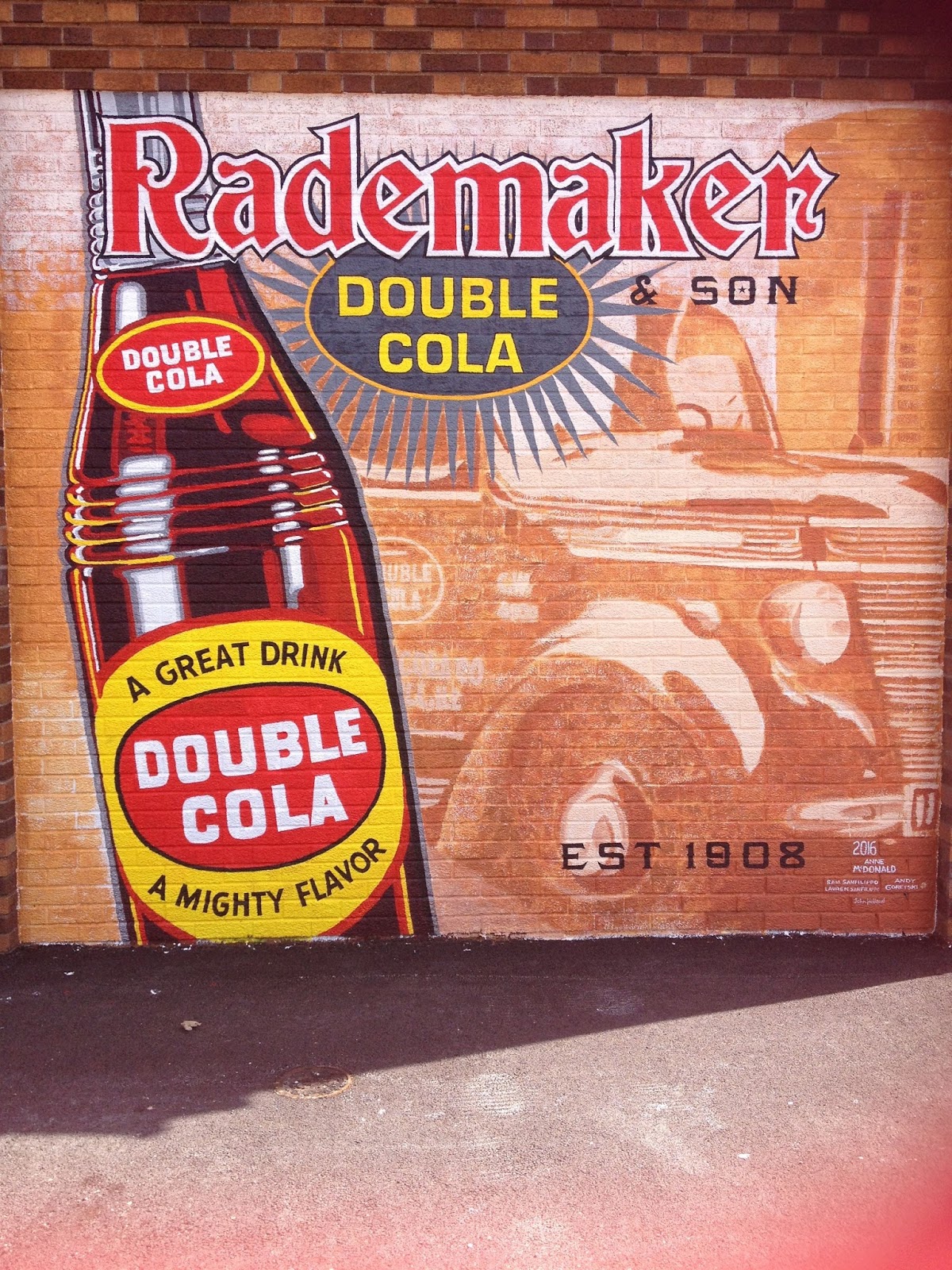
Walldogs' Murals in Marshall, IL

This weekend a friend and I visited Marshall, Illinois and toured the murals created by the Wall Dogs this summer. The Walldogs are a group of highly skilled sign painters and mural artists from all over the globe. The Walldog Movement is quickly gaining popularity, and is a great way for small towns to boost their tourism. According to the Marshall Chamber of Commerce, "over 150 artists from across the United States, as wells Canada, New Zealand, Scotland, England, and Australia descended upon Marshall leaving behind 16 historic murals and a custom glass piece."

Although we didn't find all 16 murals, we did discover and photograph thirteen of them. One of them was inside a closed post office, and the two others were outside the downtown area. We discovered much about the town from examining the murals, though, since each highlighted an important historical figure or location that contributed to Marshall's culture.


Thursday, September 1, 2016

Sweet Enough


Sweet Enough

Her father marks the Gallo
hidden in the corner cupboard,
doling out sips of Cold Duck on New Years Eve,
hours before midnight.

She eats stashes of candy instead,
handfuls of graduation cake,
and thin brownie edges.
“It’s all sucrose,” a friend tells her,

as he drinks beakers of bourbon in lieu of pie.
When she pokes her finger in the sugar
her father makes her eat the bowl, so
she dumps spoonful after spoonful

in her iced tea and wonders why
it never tastes sweet.
“It’s saturated,” her father explains,
soaked, impregnated, and pure.

Tuesday, August 23, 2016

Influential Books

I've been brainstorming for a co-created blog, Books Combined. The request reads as follows:  

Better than anyone, we think authors understand the power of books, and the ways that books can change us, and our perspective on the world. Would you be willing to write around 800 words about the books that have had a significant impact on your life, be it personally, politically, or intellectually? 

Because I just published a book with my co-writer called Monstrous Nature: Environment and Horror on the Big Screen, my first thought was to take a look at the books cited there that most powerfully influenced the work--highlighting a focused intellectual impact on my life.

The list did get pretty long, but I thought I might write about one of them here to see if this focus might work.


Marion Copeland's Cockroach provided a more complex perspective on the insect and its strengths for a chapter on cockroach horror, for example.   Copeland notes multiple positive associations with cockroaches in her book-length Cockroach, as well. Because “of its predilection for the dark” (81), Copeland suggests, the cockroach has become associated with “the unconscious and the power of the id” (81). In Thailand, Australia, South America, and French Guiana, cockroaches serve as food, medicine, and folk tale source. Copeland suggests that studies by anthropologists and explorers reveal that “rather than racking their brains for effective ways to destroy cockroaches, these cultures found the cockroach a useful neighbor, rich in protein and effective for many human diseases. They also seem to have recognized how useful they were to the environment” (81-2). Copeland also notes that cockroaches contribute to cancer research (131).
 

Other studies of cockroaches she highlights emphasize their physical and intellectual strengths by making explicit connections between cockroaches and humans. According to Copeland, “as in humans, female cockroaches have stronger immune responses than males and the very young and very old have weaker responses than mature adults” (131). As early as 1912, studies at Summer Teacher’s College in St. Louis showed that cockroaches could learn to “overcome their innate aversion to light” (135). They were also found capable of running a maze, even without their heads, a feat few animals could grasp (135). 

We can learn from the cockroach, Copeland asserts.   In Cockroach, Copeland even argues, “our survival as a species may depend on discovering a saviour [sic] who looks at us from many-faceted eyes that replace our own myopic human view with the cockroach’s ‘very long view indeed’” (168). I too think we can learn from cockroaches. They're not only "monstrous nature." They're also amazing creatures with skills.