Monday, March 29, 2021

2021 CIFFF Narrative Selections

 Narrative Selections

Note: Films accessible on filmfreeway

user name: rlmurray@eiu.edu

pw: nib8.pet


Good Wishes 
Daria Gordeeva 
Russian Federation 
Access here: https://filmfreeway.com/submissions/17937292 

This is a social video dedicated to the problem of domestic homophobia in Russia However, in this film we address not only the problem of homophobia in general, but also gaslighting and toxic communication in particular. We think that any person (not only representatives of the LGBT+ community) can suffer significant damage to their mental health if they are forced to spend their life surrounded by people who broadcast such a contradictory attitude to their personality and choice for a long time.
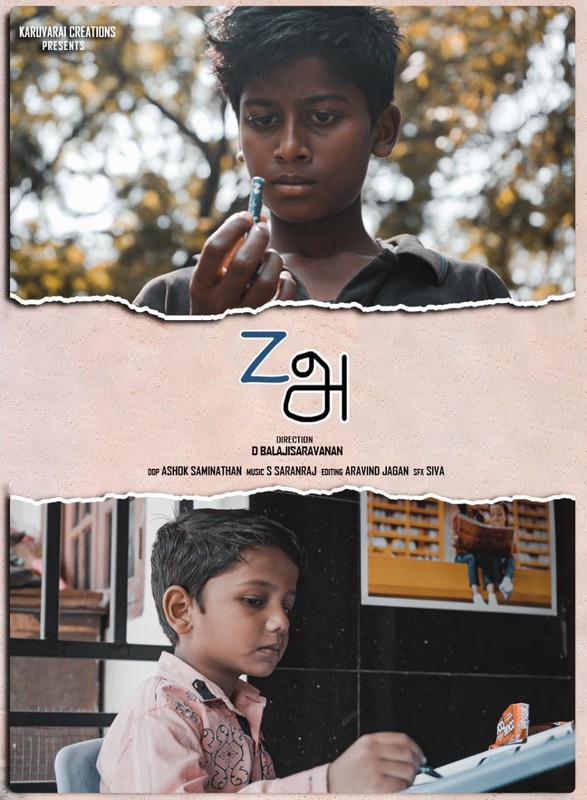


Zஅ 
D Balajisaravanan 
India 
Access here: https://filmfreeway.com/submissions/17944883 

Most of the times, we forget to realize that the things which we consider is a waste and of NO USE or END OF LIFE can be a big savior and even a START to some others. This story portrays the above. The storyline: one upper middle class young boy was coloring the Alphabet using a good color pencil. Suddenly the pencil hook breaks, and he starts crying. On seeing this, his mom throws away the broken pencil and pacifies him saying she will get another new one. A poor gully boy walking on road picks up the thrown pencil and runs far to his hut. He sharpens the color pencil and gives to his younger sister and makes her to write ‘a’, the 1st letter of local language (Tamil). Happiness blossoms on the poor boy’s and sister’s faces.


Cellfie 
Débora Mendes 
Portugal 
Access here: https://filmfreeway.com/submissions/17941993 

A scientist seeks answers by observing the world through the lens of her microscope. 


Illinois Narrative Winner


Birthday
Bianca Caniglia 
Chicago, IL USA 
Access here: https://filmfreeway.com/submissions/17925209 

A ritual for (cis)men, in which we perform a reincarnation, goddess invocation, sleep-paralysis nightmare in the realm of the Hungry Ghost. Bound by and to their Earthly desires, it is a a very very un-birthday, re-birthday party. 


 K-12 Narrative Winner


Thirty Minutes on the Earth 
Evangelina Sarett 
Russian Federation 
Middle School 
Access here: https://filmfreeway.com/submissions/17932248

John had never seen snow. He almost didn't see the green plants. Now he knows that such beautiful places existed, but people left them long time ago. But why does John feel so sad when he looks at the beautiful nature of the Earth?...


Sunday, March 28, 2021

2021 CIFFF Post-Secondary Documentary Selections


Note: Filmfreeway films accessible with user name rlmurray@eiu.edu and pw: nib8.pet

First Place 

Femme Fatale 

Meghan McArdle 

Ireland 

Access: https://filmfreeway.com/submissions/17942935 


 How fashion has been used as a catalyst for feminism in the last century.


Second Place

I Call it Home 


Leila Ahang 

Islamic Republic of Iran 

Access: https://filmfreeway.com/submissions/17850058 


This experimental abstract animation, “I Call It Home,” demonstrates two distinct worlds for a migrant who is born and lives far from her real home. One world is where she was born. It is like somewhere humans live before birth, the womb. This is growing and the spirit is blown into it. The spirit of the human is floating like a fish in the water. For her, the first world is selected as a home to settle down. But slowly she understands the real home is somewhere else. This is another world out of her mother's womb, a strange and frightening place. All things are dark and against her. So she has to struggle to overcome them. It takes time but finally she feels tranquility and starts to live in a new world like a newborn baby.


Third Place

My Mother’s Pain 


Juliana Erazo 

Columbia 

https://vimeo.com/455193418 

pw: eddmm 


This animated documentary and visual essay, tells the story of three generations of mothers and daughters in the same family. Their struggles and growth and how they worked to make their children's life better than their own.

Honorable Mention

Tishala: Nothing to Lose 


Brian Wachira 

Kenya 

https://youtu.be/lBtXD2n5lak 


The animation is about Tishala, a girl who lives in fear of being subjected to Female Genital Mutilation. She wishes what befell her friends does not befall her. She wants girls to grow up normal.

2021 CIFFF K-12 Student Documentary Winners

 Note: Film Freeway films accessible via user name, rlmurray@eiu.edu and pw, nib8.pet


First Place Winner

The Black Collective 

Roxy Morris 

USA High School Student 

 Three businesspeople of color discuss the Black Lives Matter movement, supporting black businesses, and the small shop in Encinitas, CA that showcases their products.


Second Place Winner

The Air I Breathe 

Kim Chairez 

USA High School Student 

Youth Programs for The Representation Project 
Access: https://filmfreeway.com/submissions/17750588 


 "The Air I Breathe" raises awareness about her family’s home, Wilmington, California, one of the most polluted cities in the United States. "The Air I Breathe" is a short documentary set in Wilmington exploring our relationship to our natural environment, pollution, and the air we breathe.


Illinois Winner

Family is Everything 
Erin Hastings 
Elmhurst, IL 

https://youtu.be/mr0X8PeX8rs 

A short documentary portrait of a man who survived the impossible and how it affected both him and his family.

Saturday, March 6, 2021

King Corn as Weakened Rhetorical Documentary


What weakens King Corn’s argument is its reliance on the logical fallacy of causal oversimplification. As with Michael Pollan's Food, Inc., Cheney and Ellis place blame for this corn epidemic on the policies of one man, Earl Butz, the Secretary of Agriculture under Richard Nixon because he released farmers from decades of production controls and encouraged them to plant “fence row to fence row” to meet the global demand for their corn, soybean, and wheat crops, especially. In an interview with the then 96-year-old Butz in his nursing home apartment, Cheney and Ellis wanted to challenge the modern food system his policies had helped create and policies that led to food subsidies for corn equaling $51 billion between 1995 and 2005. 


When Ian Cheney broaches the subject, asserting, “We've heard from some people that they think there is too much food,” however, Butz counters with his own unchanged perspective on his policy: "Well it's the basis of our affluence now, the fact that we spend less on food. It's America's best-kept secret. We feed ourselves with approximately 16 or 17% of our take home pay. That's marvelous, that's a very small chunk to feed ourselves. And that includes all the meals we eat at restaurants, all the fancy doodads we get in our food system. I don't see much room for improvement there, which means we'll spend our surplus cash on something else." 


Butz argues that cheap food eased hunger and increased disposable income, so everyone, for example, could afford a car. After the interview, Curt Ellis concludes that “Earl Butz was a product of his time” (“Meeting King Corn”) because he finished college in the middle of the Great Depression when scarcity was the norm, but he continues to blame Butz for the consequences of cheap corn, cheap soy, and cheap food, including Type II diabetes and obesity. 


But it was the 1996 farm bill that, according to David Moberg, “ended the old policy of managing both prices and production through a system of loans, target prices and stored surpluses” and “provided subsidy payments to farmers that were ‘decoupled’ from production.” And those subsidies continued after 2002, when prices crashed and subsidies became seen as a political necessity. Blame for the turn to high fructose corn syrup also does not land solely on Earl Butz’s shoulders, since the move occurred in 1980 after sugar tariff and quota policies failed during the Carter administration. Ethanol, an area of corn production overlooked by the film, became a centerpiece of the Carter administration, as well, as an alternative energy solution to ongoing oil embargo problems. King Corn entertains and partially enlightens the issues surrounding corn production, but it falls short because, like Food, Inc., it draws too much on nostalgia, and its argument is oversimplified.

Saturday, February 27, 2021

King Corn: Process-Driven Nostalgia


By concentrating on one element of Michael Pollan’s work explored in Food, Inc., corn production, and adding humor to the chilling information it conveys, King Corn provides a more engaging process-driven narrative that attempts to reveal why corn now comprises such a large percentage of the American diet. Dennis Harvey’s Variety review provides a positive perspective of the film, asserting that Cheney and Ellis’s “low-key antics, their affectionate regard for the small-town milieu, some delightful stop-motion animation and an excellent rootsy soundtrack by the WoWz all make "King Corn" go down easy, even if you might regard your burger, fries and Coke with suspicion afterward.” 


Ann Hornaday of the Washington Post agrees, asserting that the film is “gorgeously filmed in digital video and Super-8, using clever stop-motion corn kernel animation and a lyrical score by the "anti-folk" band the WoWz.” According to Hornaday, too, with help from its “engaging guides,” Cheney and Ellis, "King Corn takes what could be a tiresome agri-civics lesson and delivers a lively, funny, sad and even poetic treatise on the reality behind America's cherished self-image as the breadbasket of the world.” Andrew O’Hehir of Salon.com also highlights the lessons of King Corn but concludes, “This information arrives via a graceful and frequently humorous film that captures the idiosyncrasies of its characters and never hectors.”


Through their naïve attempts to grow corn in Greene, Iowa, their ancestral home, Ian Cheney and Curt Ellis do reveal the extent to which corn has entered the American diet, so much so that, when tested, their bodies chemistries both include more than fifty percent corn. To expose how corn has become an ingredient in nearly every food source found in the supermarket, Cheney and Ellis plant, grow, and harvest one acre of corn. During the process, the two learn not only about the corn-growing process, but also about the farm subsidies that support the corn industry, especially since changes in subsidy legislation during the Nixon administration. 


Like Food, Inc., King Corn relies on nostalgia as a rhetorical tool, contrasting the industrialized corn production expected today—with powerful fertilizer, government aid, and genetically modified seed to support it—with traditional farming techniques practiced in the same area when their great-grandparents farmed the land. By primarily maintaining this focus on corn production and its entrance into the American diet through high fructose corn syrup and other corn-based ingredients found in almost every food item in the supermarket and the fast food restaurant, the film successfully demonstrates the power of corn.

Monday, February 22, 2021

Food Inc. as Rhetorical Adaptation


Food, Inc. stands up as an adaptation of Pollan’s nonfiction book, The Omnivore’s Dilemma, even following a similar narrative structure that begins with an interrogation of industrial farming and its relation to corn, that then moves nostalgically to the pastoral alternative where cattle feed on field grass instead of feedlot corn. Pollan’s work, however, offers an extensive bibliography of resources to support his claims. In Food, Inc., however, broad-based evidence is replaced with single case support, so individual examples are meant to support assertions about both the control of the market and the negative consequences of such vertical integration.


The film’s expose of the chicken industry is a case in point. In this segment, the narrator asserts that Tyson isn’t “producing chicken; it is producing food and is mechanized so chickens are grown to be almost the same size.” He explains that Tyson produces “lots of food on little land for the least money.” Then an example of a Tyson farm in McLean, Kentucky is used to support this claim. The conditions in the henhouse seem to make the case against four companies controlling 80% of the market. According to this chicken farm owner, mass production leads to dust and feces, as well as chickens with bones and internal organs that grow so fast the chickens are unable to stand. To protect herself from these conditions, the farm owner wears a mask while applying antibiotics to their feed. Yet, according to the owner, “bacteria work up resistance, so it’s not working.” She claims undocumented workers work at plants and attend work even if they are sick, as well. According to the narrator, the Perdue Chicken Company also keeps chicken farmers under their thumbs, but we do not see an example of a Perdue farm because the company will not allow the filmmakers to document workers on the farm. Instead, this one example of a Tyson chicken farm gone wrong is used to illustrate a problem with much broader consequences. 


Food, Inc. also includes individual examples of cattle production and corn production before offering an alternative—organically grown foods that are meant to help viewers reminisce nostalgically about a pastoral past now out of our grasp. Again the film provides an individual example to support its assertion that growing and consuming food in traditional ways is a viable solution to factory farming. Joel Salata’s Polyface Farms is shown in stark contrast to the factory farms like Tyson Foods and Smithfield. On the Polyface Farm, cattle eat grass instead of a feedlot diet of corn, dead cows, chickens, and manure, Salata explains. Manure fertilizes the grasses, he explains. According to Salata, “they hit the bulls-eye at the wrong target—plant, fertilize and harvest corn with satellites when they should be asking if we should feed them corn at all.” 


 After highlighting problems with genetically-altered corn and soybeans like Roundup Ready, the film ends with a series of solutions to the industrial food problem: Respecting the season, buying organic and non genetically-modified foods from local farmers and farmers’ markets, growing one’s own food, and allowing food stamps at farmers’ markets are just a few. But the film’s message is almost lost in the voiceover narration and over-reliance on individual examples to substantiate claims. Although Food, Inc. does provide a plethora of information about industrialized farming and argues from a clear position, its message is weakened by both its nostalgic vision and by the rhetorical strategies the filmmakers choose to employ.

Sunday, February 14, 2021

Food, Inc.: An Expert’s Pastoral Fantasy


Following a pattern similar to Michael Pollan in The Omnivore’s Dilemma, the Talking-Heads documentary Food, Inc. attempts to illustrate how the American supermarket reflects both the changes in our food and our nostalgia for a pristine agrarian past when, at least in what the narrator claims is “a pastoral fantasy,” the fruits, vegetables, meat, and dairy we eat came directly from the family farm. Images of farmers and farms are used to sell a multitude of supermarket products, 47,000 in an average grocery store, according to the narrator. In a store where tomatoes are sold year-round, and meat and poultry are sold without bones, however, according to this narrator, a “deliberate veil” has been constructed between food and its source, the narrator explains. 


In reality, food is produced in a factory, not on a farm, the film claims, so that “now food is coming from enormous assembly lines where both animals and workers are abused.” With help from contrasting images of these factory farms, interviews, and voiceover narration, Food, Inc. attempts to show how corporations control food from seed to supermarket. The film’s assertions are weakened, however, not only because of an over-reliance on the authority of a narrator, but also because the film argues its points from single examples, moving from the whole to the particular with a clear point of view that remains unsubstantiated.  


Many critics, however, regard the information the film attempts to convey, in general as “important.” For example, Owen Gleiberman of Entertainment Weekly argues that the film is “one that nourishes your knowledge of how the world works.” And John Anderson of Variety asserts that Food, Inc. “does for the supermarket what Jaws did for the beach—marches straight into the dark side of cutthroat agri-business, corporatized meat and the greedy manipulations of both genetics and the law.” According to Andrew O’Hehir of Salon.com, “the food-activism movement in 2009 is roughly where the environmental movement was in 1970…. Food, Inc. is meant to be an opening salvo that gets people’s attention, not the battle that wins the war.” 


Yet other critics find the film derivative rather than breaking new ground. Kyle Smith of the New York Post, for example, asserts, “The film offers very little that food radicals don’t already know. Journalists Eric Schlosser… and Michael Pollan serve as the packhorses, turning up to say things on camera they’ve been saying in print for years.” Smith also argues that charges made in the film remain unsubstantiated. Instead, we assert that the film does attempt to support its “charges,” but relies too heavily on individual examples to make its case. 


As an illustration, the film begins with a more generalized image of a factory and a businessman in a wheat field meant to reinforce the connection between farming and factories, as a narrator explains, “They don’t want this story told.” According to images and narration, however, industrial food production’s cause is connected to one company, the McDonald Brothers, who now control our food system, from beef, potatoes, and pork, to tomatoes and apples. From here the film highlights example areas of food production controlled by McDonalds, from chicken and beef production to the corn production that sustains them both.