I have stories live stories but can't tell stories Instead I compare associate moving from one image to another List journal entries workout email dog walks sunflowers fireworks gap-toothed smiles.
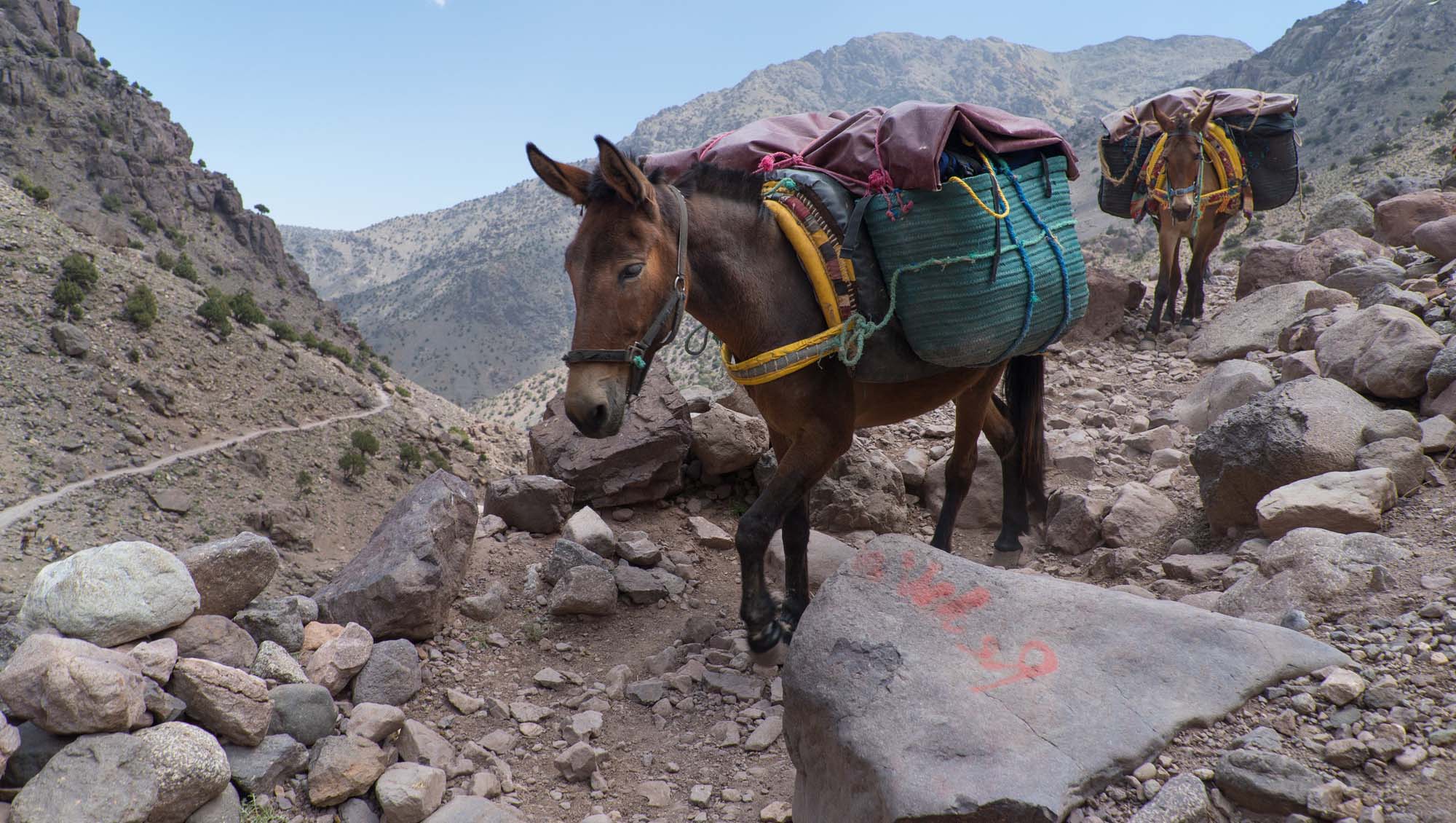
"They said no matter how far a mule travels it can never come back a horse" (Junot Diaz) How far must a mule travel to come back a horse? Would this journey require evolution? adaptation? Is it better to be a horse than a mule? I'm not so sure since my stubborn disposition helps me keep a routine even when what seems apocalyptic closes the road.
Since March 30, I've been keeping a daily journal responding to quotes from writers, philosophers, and everyday people. Sometimes they make no sense, other times they actually make me smile. In the first installment I write, "After three years the spice bush erupts in yellow bows on twigs of hair, tiny braids dangling under that favorite tree branch where I feel like Pippi laughing as I swing." A couple of days later I just worked on listening. "No matter how empty a room it still hums, ticks, and rattles. Once I hitched a ride with older Campfire Girls for a West Virginia caving trip. At fourteen, hanging out with seventeen-year-olds and college freshman in a dorm and cafeteria filled me with excitement.. But we crawled and slithered into a dark cave, turned off our head lamps for real darkness, so only our ears opened up the room."
Although the female body primarily bears the brunt of masculine exploitation in American Psycho, Bateman also misuses more traditional frontiers where cultures clash and both a land and its people are threatened. As David Eldridge reiterates, Bateman’s “main victims are [according to Faye Weldon] ‘the powerless, the poor, the wretched,’ those who ‘don’t rate’ in Reaganite America” (23). The same could be said of those exploited at a distance.
In a conversation with friends in one of the many restaurants cited in the film, for example, Bateman challenges his colleague Timothy Bryce (Justin Theroux) about the extent of the massacres in Sri Lanka. Bateman exclaims, “There are a lot more important problems than Sri Lanka to worry about. Sure our foreign policy is important, but there are more pressing problems at hand.” He then delineates several more potentially exploitative clashes: “Well, we have to end apartheid for one. …We have to provide food and shelter for the homeless and oppose racial discrimination and promote civil rights while also promoting equal rights for women.”
When Donald Kimball (Willem Dafoe), a private investigator, interviews Bateman about the last time he saw Paul Owen, one of Bateman’s victims, Bateman again invokes frontiers, claiming, “We had … gone to a new musical called … Oh Africa, Brave Africa. It was…a laugh riot … and that's about it. I think we had dinner at Orso's. No, Petaluma. No, Orso's.” Both these examples connect the consumption of food with the figurative consumption of cultures, updating the American frontier in a late 20th century upper class economy. They also introduce an indictment of Wendigo/wetiko that Bateman reifies on the bodies of his victims.
American Psycho (2000)illuminates expanded definitions of frontier constructed on similar dichotomies found in Ravenous: colonizer/colonized, masculine/feminine, nature/culture, and Wendigo or wetiko/sustainability. According to Annette Kolodny, a frontier, and the literature and film that embody it, “may be identified by its encoding of some specifiable first moment in the evolving dialogue between different cultures and languages and their engagement with one another and with the physical terrain” (Lay of the Land 13). Kolodny’s definition of frontier expands it beyond traditional views of the American West to include multiple collisions between “a currently indigenous population and at least one group of newcomers or ‘intruders’” (13). Despite their contemporary contexts, American Psycho highlights similar collisions from a gendered perspective.
Scholars examining Mary Harron’ film adaptation of Bret Easton Ellis’s American Psycho primarilyexplore how the film plays with and responds to genre expectations, with a nod to Patrick Bateman’s (Christian Bale) identity construction and status as an unreliable narrator. David Eldridge’s “The Generic American Psycho,” for example, asserts that “the power of genre classifications was a constant concern” in both novel and film (19). David Robinson’s “The Unattainable Narrative: Identity, Consumerism and the Slasher Film in Mary Harron’s American Psycho” also highlights the film’s genre responses, asserting that the film “borrows the horror genre’s trademark self-consciousness and takes it to a new level, marrying the genre to a larger body of cultural narratives, including those of television, pop musing, news media, and advertising” (26). These multiple cultural narratives also provide fodder for Bates’ identity construction as both venture capitalist and real or imagined cannibal serial killer.
We assert, however, that in American Psycho, Patrick Bateman,a wealthy New York investment banking executive negotiates a post-colonial frontier in which women become landscapes to exploit, annihilate, and cannibalize, just as he and his colleagues consume material culture and collide with those who provide it. Although Bateman hides what could be psychopathology from his co-workers and friends and dives deeper into a deviant world like that described in Wendigo mythology, his aberrant responses to the 1990s Yuppie world of excess merely amplify theirs. According to Jennifer Brown, in American Psycho “the cannibal has become the reviled image of overindulgence, overspending, and overexploitation of resources” (214), more “us” than “them.” As a contemporary Wendigo, Bateman bumps up against the feminine underclass on Wall Street, negotiating a modern frontier without the sanity Forbes prescribes. Only Jean (Chloë Sevigny), Bateman’s secretary, survives the crash.
In Antonia Bird's Ravenous, Colqhoun’s (Robert Carlyle) cannibal story prompts George to recount the Wendigo myth, highlighting Colqhoun’s literal cannibalism as well as the imperial repercussions his journey westward represents. As Danette DiMarco articulates so well in her “Going Wendigo: The Emergence of the Iconic Monster in Margaret Atwood’s Oryx and Crake and Antonia Bird’s Ravenous,” the film “is an appropriative text that invokes the Wendigo myth and evaluates cannibalistic discourse more broadly in order to critique Western cultural crisis” (134).
Through the figure of the Wendigo, the film elucidates a direct relationship between literal cannibalism and figurative consumption of the American frontier Jack D. Forbes calls this figure the wetiko disease, “the disease of exploitation” (xix). According to Forbes, wetiko is a Cree term (windigo in Ojibway, wintiko in Powhatan) which refers to a cannibal or, more specifically, to an evil person or spirit who terrorizes other creatures by means of terrible evil acts, including cannibalism” (24).
For Forbes, “imperialism and exploitation are forms of cannibalism and, in fact, are precisely those forms of cannibalism which are most diabolical or evil” (24). Jennifer Brown reinforces this connection between imperialism and cannibalism in Ravenous, asserting “Rather than the colonial use of cannibalism as tag of the savage, it is the white man who is barbaric and the Native American who is calm, intelligent, and reminds us that ‘whites eat the body of Christ.’” (226).
In Ravenous, Colqhoun and Capt. John Boyd (Guy Pearce) of Fort Spencer illustrate conflicting responses to both the frontier myth and Wendigo. To save the land and its people, Wendigo/colonizer must die.
In cannibal horror films like Ravenous, gendered bodies and the volatile agents of the material world they inhabit may become violently intertwined. At Fort Spencer, Boyd joins a group of misfits with little to do on this empty range: Hart, the commanding officer; Toffler (Jeremy Davies), the company chaplain; Knox (Stephen Spinella), the drunken doctor; Reich (Neal McDonough), the only real soldier of the group; Cleaves (David Arquette), the heavily medicated camp cook; and George and his sister Martha (Sheila Tousey), the troops’ Indian guides.
The dull life they maintain in this wilderness fort is shattered, however, when Colqhoun/Colonel Ives arrives and introduces cannibalism and the Wendigo myth into the plot. Colqhoun also gives a name to the cravings Boyd so wishes to end and amplifies the impact of gender on its manifestation. Although an emasculated Boyd resists Wendigo, and Martha escapes its effects, Colqhoun embraces it.
Frostbitten and famished, Colqhoun provides the narrative that transforms Ravenous from Western to horror. Colquhoun’s Westward movement story first connects him with the Manifest Destiny of both the Mexican-American War and the westward movement. According to Colqhoun,
We left in April. Six of us in all. Mr. MacCready and his wife, from Ireland. Mr. Janus, from Virginia, I believe … with his servant, Jones. Myself - I'm from Scotland. And our guide … a military man, coincidently. Colonel Ives. A Detestable man … and a most disastrous guide. He professed to know a new, shorter route through the Nevada's. Quite a route that was. Longer than the known one … and impossible to travel. We worked … very, very hard. By the time of the first snowfall we were still a hundred miles from this place. That was November.
When the journey from Virginia to California is disrupted by the horrific winter conditions of the Sierra Madres, however, their pioneering spirit transforms to the Wendigo to which it is compared:
Preceding in the snow was futile. We took shelter in a cave. Decided to wait until the storm had passed. But the storm did not pass. The trails soon became impassable, and we had run out of food. …We remained famished. The day that Jones died I was out collecting wood. He had expired from malnourishment. And when I returned, the others were cooking his legs for dinner. Would I have stopped it had I been there? I don't know. But I must say, when I stepped inside that cave … the smell of meat cooking … I thanked the Lord. I thanked the Lord. And then things got out of hand. I ate sparingly. Others did not. The meat did not last us a week and we were soon hungry again only, this time our hunger was different. More severe, savage.
Colqhoun embodies and embraces Wendigo--both literally as cannibal and figuratively as colonizer in frontier America.


/horse-galloping-in-grass-688899769-587673275f9b584db3a44cdf.jpg)