Keeping up with all of my responsibilities sometimes feels like the usual cliches--a marathon, a juggling act, or embarrassed smiles after reading Christmas letters from friends.
We didn't send our Christmas cards and letters on time when I was a kid. Instead, we waited to hear about the Schumacher's amazing daughters' feats on the dance floor and in the classroom before scrawling our signatures on a Hallmark card.
Now, I'm blushing thinking of that green face of envy and red face of shame these letters caused. With too many tasks on the table, I'm dreaming of days of nothing to do but read in a tree and sing.
Wednesday, March 7, 2018

Sunday, February 25, 2018
Ecocinema and the City Part I

Ecocinema and the City seeks to add to urban ecocinema scholarship by exploring four sections arranged to
highlight the increasing importance nature performs in the city: Evolutionary Myths Under the City, Urban
Eco-Trauma, Urban Nature and Interdependence, and The Sustainable City. The first two sections,
“Evolutionary Myths Under the City” and “Urban Eco-Trauma,” take more traditional ecocinema
approaches and emphasize the city as a dangerous constructed space.

Part I, “Evolutionary Myths Under the City” examines evolutionary narratives of environmental adaptation in
both film noir and documentaries focused on urban sewers and subways. The films explored in our first section,
“Evolutionary Myths Under the City,” call into question the idea of the city as natural and unaffected by human
intervention and illustrate how social and environmental injustices sometimes intertwine. The notion of
displacement from the New Objectivity art movement of the 1920s helps elucidate this de-naturalizing of the city.
As Daniela Fabricius explains, “Displacement can be a way of understanding not only the abyss between a
landscape and how it is represented but also the erosion of the seemingly fixed binaries that separate natural
and manmade environments” (175). “Evolutionary Myths Under the City” explores these fluid binaries as it
focuses on tragic and comic evolutionary narratives. The films explored in this section ask evolutionary
questions about who we are, where we’re going, and which story of ourselves we choose to construct:
a tragic or comic evolutionary narrative.

Chapter 1, “The City, The Sewers, The Underground: Reconstructing Urban Space in Film Noir” examines
the idea of the city as a social and cultural construct through a reading of He Walked by Night (1948). The
film highlights how and why not genetics but social, cultural and historical forces construct “gangsters.” But
what sets the film apart from other noir films is the attention it gives to the urban infrastructure hidden
below its progressive construction. By foregrounding sewers as constructions, escape routes, and seemingly
safe havens for noir characters, the film demystifies what seem like “givens” and calls into question the
idea of the city as natural.

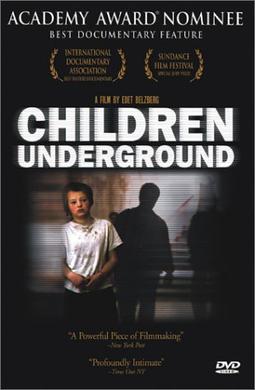
Chapter 2, “Documenting Environmental Adaptation Under the City: Children Underground (2001)” explores
underground constructions from the perspective of homeless children in Children Underground (2001). On the
surface the children in Children Underground have entered an underground that serves as the site of technological
progress where excavation produces not only the means of production—coal and oil, for example—but also
the foundation for the urban infrastructure—sewage and water systems, railways, gas, and lines for
electricity, computers, and phones. They have entered a technology-driven underworld and reconstructed,
domesticated, and humanized it as a home, an ecology in which they can move beyond survival toward
interdependence. Yet because their plight and the home they inhabit are built on both nature and former
dictator Ceausescu’s cultural attitudes, these homeless children also illustrate how social and environmental
injustices sometimes intertwine.
Urban Cinema Studies and the Search for Everyday Environments

Explorations of urban cinema sometimes emphasize the interconnection between cinema and a (sometimes) lifeless
modern and post-modern city, opening up possibilities for ecocritical readings. In the introductory essay to
Cinema and the City: Film and Urban Societies in a Global Context, for example, Mark Shiel highlights the
“curious and telling correlation between the mobility and visual and aural sensations of the city and the mobility
and visual and aural sensations of the cinema” (1). The film industry contributes to urban economies around the
world “in the production, distribution, and exhibition of motion pictures, and in the cultural geographies of
certain cities particularly marked by cinema (from Los Angeles to Paris to Bombay) whose built environment
and civic identity are both significantly constituted by film industry and film” (1-2).
modern and post-modern city, opening up possibilities for ecocritical readings. In the introductory essay to
Cinema and the City: Film and Urban Societies in a Global Context, for example, Mark Shiel highlights the
“curious and telling correlation between the mobility and visual and aural sensations of the city and the mobility
and visual and aural sensations of the cinema” (1). The film industry contributes to urban economies around the
world “in the production, distribution, and exhibition of motion pictures, and in the cultural geographies of
certain cities particularly marked by cinema (from Los Angeles to Paris to Bombay) whose built environment
and civic identity are both significantly constituted by film industry and film” (1-2).
Shiel suggests urban cinema’s grounding in the society of the city and the culture of cinema opens it up for
interdisciplinary readings connecting film studies with sociology, cultural studies, geography, and urban studies.
The book’s goal is to “produce a sociology of the cinema in the sense of a sociology of motion picture production,
distribution, exhibition, and consumption, with a specific focus on the role of cinema in the physical, social, cultural,
and economic development of cities” (3). Both sociology and film studies gain much from this connection,
according to Shiel. Following an Althusserian structural view, Shiel argues Cinema and the City “recognizes
the interpenetration of culture [film], society [city], and economics as part of ‘a whole and connected social
material process,’ to use Raymond Williams’s terminology” (4). For Shiel, cinema is also “a peculiarly spatial
form of culture” (5) in a global (inequitable) context that is historically situated. Instead of approaching cinema
and the city from an architectural perspective, this volume explores the connections between the culture of
cinema and the society and economics of the city.
interdisciplinary readings connecting film studies with sociology, cultural studies, geography, and urban studies.
The book’s goal is to “produce a sociology of the cinema in the sense of a sociology of motion picture production,
distribution, exhibition, and consumption, with a specific focus on the role of cinema in the physical, social, cultural,
and economic development of cities” (3). Both sociology and film studies gain much from this connection,
according to Shiel. Following an Althusserian structural view, Shiel argues Cinema and the City “recognizes
the interpenetration of culture [film], society [city], and economics as part of ‘a whole and connected social
material process,’ to use Raymond Williams’s terminology” (4). For Shiel, cinema is also “a peculiarly spatial
form of culture” (5) in a global (inequitable) context that is historically situated. Instead of approaching cinema
and the city from an architectural perspective, this volume explores the connections between the culture of
cinema and the society and economics of the city.

Focused exclusively on Indian cinema, Preben Kaarsholm’s edited volume
and the modern city. According to Kaarsholm, “Movies and cinemas have in themselves been
central rallying points, symbols, and institutions of modernization, and battlefields for the
understanding of, for formulations and appropriations of, the conditions of the new life as
against ‘what used to be’” (1). They provide a space in which “modern urban culture and politics”
are controlled and decorate the urban landscape with “sight and sound from movie posters,
film advertisements, tannoys, radio and tapes of soundtrack music” (1).

Like Shiel, Kaarsholm agrees that modernity and the metropolis are intertwined and interrelated, and that
association produces both positive and negative results. As Kaarsholm suggests, “modernities and experiences
of the breakdown of the old come to the fore in the plural—as historical conjunctures and life situations which
are the outcomes of a single evolutionary logic, but rather as battlefields of contestations between different
forces of development and different cultural and political agendas” (5), especially those between European
colonial powers with linear and dualist views of progress and an indigenous agenda that strives for a more
communal and equitable vision of modernity. Indian cinema reflects this same mixture of Westernized
and indigenous cultures, both in films produced for Indian audiences and those directed at an international
audience and screening circuit (9).
association produces both positive and negative results. As Kaarsholm suggests, “modernities and experiences
of the breakdown of the old come to the fore in the plural—as historical conjunctures and life situations which
are the outcomes of a single evolutionary logic, but rather as battlefields of contestations between different
forces of development and different cultural and political agendas” (5), especially those between European
colonial powers with linear and dualist views of progress and an indigenous agenda that strives for a more
communal and equitable vision of modernity. Indian cinema reflects this same mixture of Westernized
and indigenous cultures, both in films produced for Indian audiences and those directed at an international
audience and screening circuit (9).

With their emphasis on class, race, and cultural politics, Shiel and Kaarsholm highlight issues with
potential environmental concerns, including environmental justice and environmental racism. They also begin
to connect the economic concerns illustrated by urban cinema with toxic environments and human ecology.
The hope is that works like these can also reveal not only the toxic connections between
“cultural and political agendas” and the environment, but also demonstrate “the fundamental connections
to the environment in our everyday lives” (Price 538).
potential environmental concerns, including environmental justice and environmental racism. They also begin
to connect the economic concerns illustrated by urban cinema with toxic environments and human ecology.
The hope is that works like these can also reveal not only the toxic connections between
“cultural and political agendas” and the environment, but also demonstrate “the fundamental connections
to the environment in our everyday lives” (Price 538).
Sunday, February 11, 2018

Central Illinois Feminist Film Festival Call for Papers

Central Illinois Feminist Film Festival
Eastern Illinois
University
Call for
Submissions
Deadline: March 1, 2018
Festival: March 20, 2018
We are looking for short student
films of high artistic quality that satisfy at least two of the
following criteria:
1.
Films
created with an emphasis on gender and/or social justice issues
2.
Films
that link local and global issues
3.
Films
created by people underrepresented in the media field (women, people of color,
queer/transgendered
people, people with disabilities)
4.
Films
made by people from the Central Illinois area
How to submit:
· Submit through Film Freeeway: https://filmfreeway.com/festival/CIFFF
· Send a link to your Vimeo,
YouTube, or other source to rlmurray@eiu.edu
Guidelines:
1.
Films
should be short: under 30 minutes in length.
2.
Films
should be labeled with your name, address, and email address, and
the
title of your film.
3.
In
your cover letter, explain how you and your film fit our criteria and include a
two-three
sentence
synopsis.
Note: There is no submission fee
for this film festival.
This
film festival promotes the mission of our Women’s Studies Program: to promote
an understanding of how issues related to gender, age, race, economic status,
sexual identity, and nationality affect women's lives and the communities in
which they live. In order to promote an equitable and sensitive environment for
all persons, Women’s Studies also responds to issues affecting women on campus
and in the community.
Send Queries to: Central
Illinois Feminist Film Festival
Women’s Studies Program,
Eastern Illinois University, Charleston, IL 61920
Attn: Robin L. Murray
Thanks to UC Davis Film Fest for information
regarding the Call
Subscribe to:
Posts (Atom)