Wednesday, September 28, 2016

Changing Trains Poem


Changing Trains


I liked blondes that summer
“kiss me please”
farmers

hands
wrapping
my waist
in the beer tent

Rolling out the Barrel
one
two
three

sheltering
rides on the Zipper.


At the top
We looked
over a field
watching pumpjacks
between rows

gas flares blowing
rotten eggs
across tassels.


Closing my eyes
oil wells rose up
like viaducts

and I boarded a train
skimming over
light rails.


By Halloween
the Polka stopped.

Schlitz cans rolled
just as
Jamie Lee Curtis


Screamed.

Monday, September 19, 2016

Curating a Western Film Series at the Autry


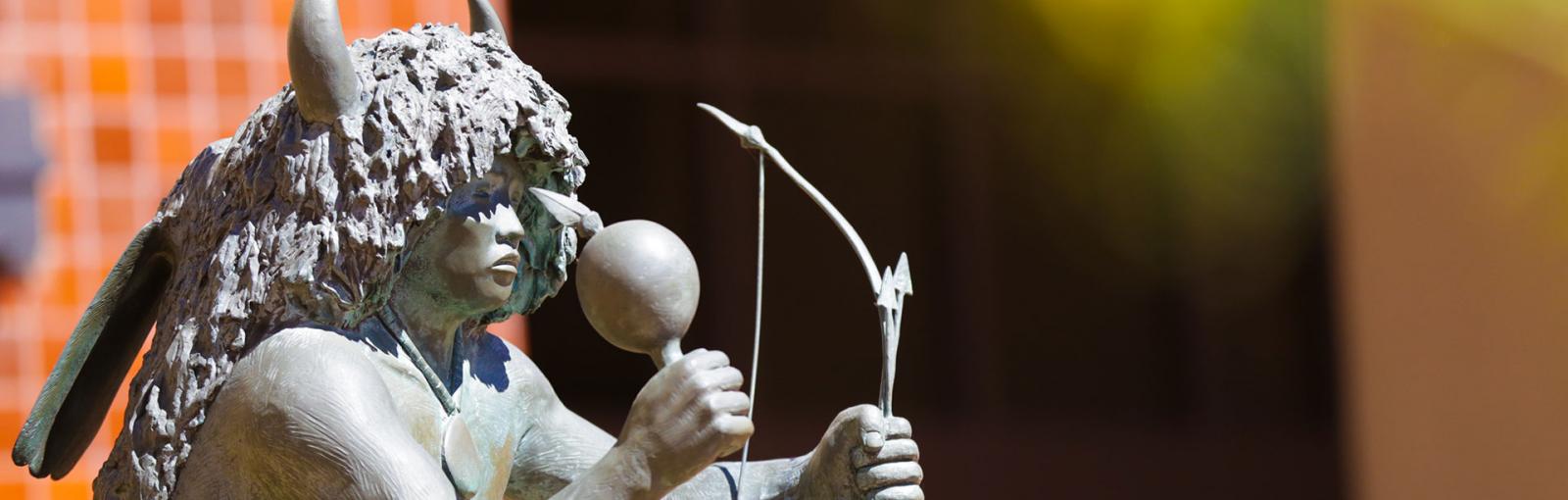
In January and February 2017, we will be curating a film series at The Autry Museum of the American West. "The Autry"—brings together the stories of all peoples of the American West, connecting the past with the present to inspire our shared future. Co-founded in 1988 by Jackie and Gene Autry and Joanne and Monte Hale, the Autry has grown to encompass a broad and inclusive representation of art, artifacts, cultural materials, and library holdings. In 2002, the Autry merged with Women of the West, a nonprofit organization highlighting the impact of diverse women’s experiences on the history of the American West. In 2003, after many years of being on the verge of financial insolvency and with the collection and buildings in need of significant care and investment, the Southwest Museum of the American Indian sought a merger with the Autry Museum of Western Heritage, and a new organization was formed (now known as the Autry Museum of the American West). The Autry's diverse collections include more than 600,000 artifacts, artworks, and archival materials that reflect the interconnectedness of cultures and histories in the American West.

The Autry currently spans three campuses in Los Angeles: the Autry Museum in Griffith Park, the Historic Southwest Museum Mt. Washington Campus, and the Resources Center of the Autry (under construction):

Autry Museum in Griffith Park

The Autry Museum in Griffith Park, originally the Gene Autry Museum of Western Heritage, was co-founded by Jackie and Gene Autry and Joanne and Monte Hale. With the opening of the Museum in 1988, Gene Autry realized his dream "to build a museum which would exhibit and interpret the heritage of the West and show how it influenced America and the world." Attracting between 150,000 and 200,000 annual visitors, the Autry in Griffith Park presents a wide range of special exhibitions and public programs that explore the art, history, and cultures of the American West.


Historic Southwest Museum Mt. Washington Campus

The Historic Southwest Museum Mount Washington Campus is the original location of the Southwest Museum of the American Indian, the oldest museum in Los Angeles, and was founded by Charles Fletcher Lummis. In 2015 the National Trust for Historic Preservation named the historic site a National Treasure, launching a collaborative process to identify a long-term sustainable future for this Los Angeles landmark.


We'll pass along more information as it is available, but we know for sure we will be curating the film series at the Autry Museum in Griffith Park. 

Lake Charleston Trails


Dolly and I took a walk on the newly paved Lake Charleston levy trail over the weekend, enjoying the water, the cool lake breeze, and the birds as we walked. Here are a few shots to sum up our little adventure.

The Lake from the Levy

An attempt to capture water birds with my IPhone

A welcome to the new trail.

Rules of the trail

The shady gravel past the levy

Dolly admires the lake

The other side of the levy

An unsuccessful selfie

One of the many benches on the trail

Love that light on the water


Tuesday, September 6, 2016

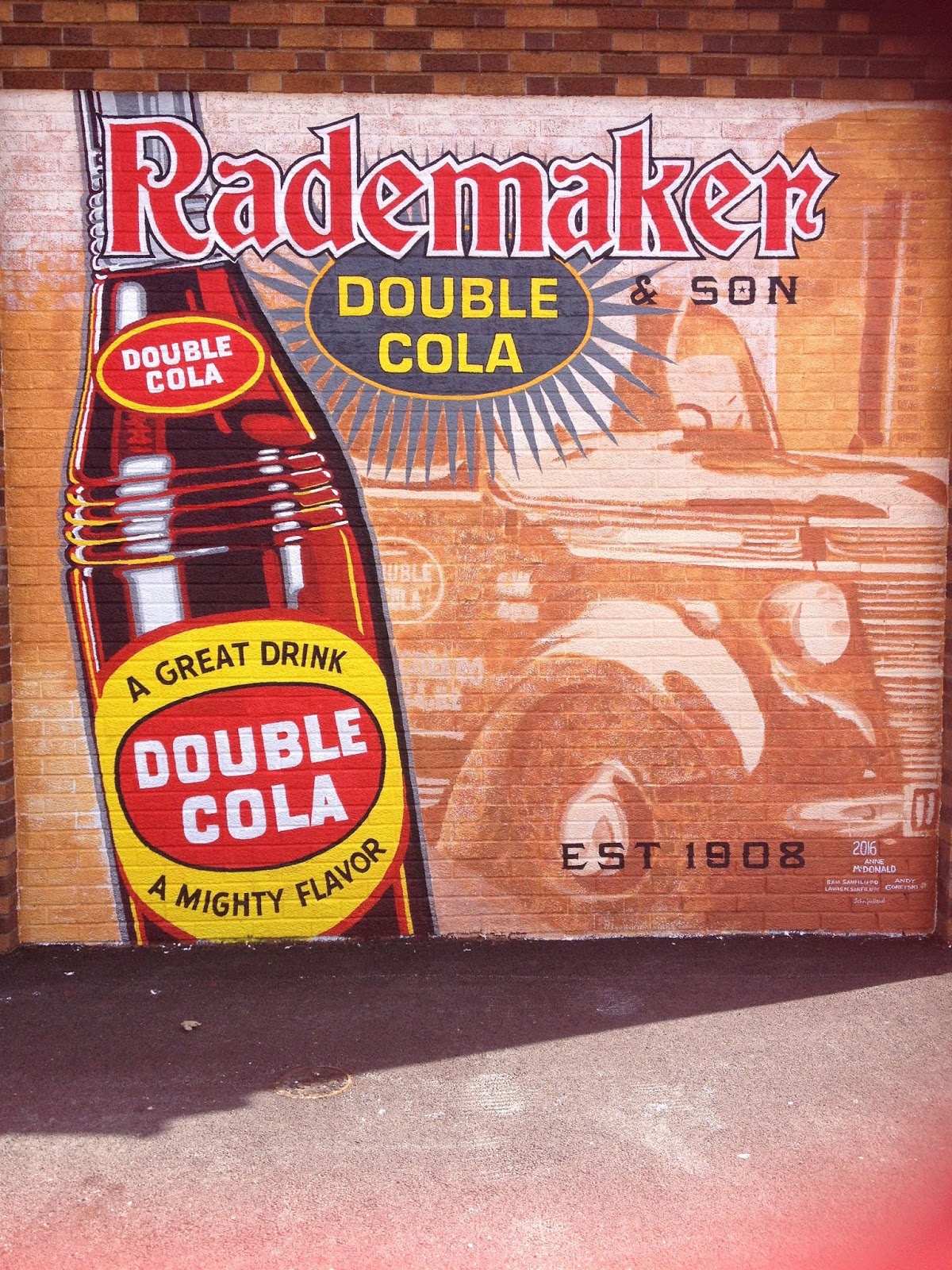
Walldogs' Murals in Marshall, IL

This weekend a friend and I visited Marshall, Illinois and toured the murals created by the Wall Dogs this summer. The Walldogs are a group of highly skilled sign painters and mural artists from all over the globe. The Walldog Movement is quickly gaining popularity, and is a great way for small towns to boost their tourism. According to the Marshall Chamber of Commerce, "over 150 artists from across the United States, as wells Canada, New Zealand, Scotland, England, and Australia descended upon Marshall leaving behind 16 historic murals and a custom glass piece."

Although we didn't find all 16 murals, we did discover and photograph thirteen of them. One of them was inside a closed post office, and the two others were outside the downtown area. We discovered much about the town from examining the murals, though, since each highlighted an important historical figure or location that contributed to Marshall's culture.


Thursday, September 1, 2016

Sweet Enough


Sweet Enough

Her father marks the Gallo
hidden in the corner cupboard,
doling out sips of Cold Duck on New Years Eve,
hours before midnight.

She eats stashes of candy instead,
handfuls of graduation cake,
and thin brownie edges.
“It’s all sucrose,” a friend tells her,

as he drinks beakers of bourbon in lieu of pie.
When she pokes her finger in the sugar
her father makes her eat the bowl, so
she dumps spoonful after spoonful

in her iced tea and wonders why
it never tastes sweet.
“It’s saturated,” her father explains,
soaked, impregnated, and pure.

Tuesday, August 23, 2016

Influential Books

I've been brainstorming for a co-created blog, Books Combined. The request reads as follows:  

Better than anyone, we think authors understand the power of books, and the ways that books can change us, and our perspective on the world. Would you be willing to write around 800 words about the books that have had a significant impact on your life, be it personally, politically, or intellectually? 

Because I just published a book with my co-writer called Monstrous Nature: Environment and Horror on the Big Screen, my first thought was to take a look at the books cited there that most powerfully influenced the work--highlighting a focused intellectual impact on my life.

The list did get pretty long, but I thought I might write about one of them here to see if this focus might work.


Marion Copeland's Cockroach provided a more complex perspective on the insect and its strengths for a chapter on cockroach horror, for example.   Copeland notes multiple positive associations with cockroaches in her book-length Cockroach, as well. Because “of its predilection for the dark” (81), Copeland suggests, the cockroach has become associated with “the unconscious and the power of the id” (81). In Thailand, Australia, South America, and French Guiana, cockroaches serve as food, medicine, and folk tale source. Copeland suggests that studies by anthropologists and explorers reveal that “rather than racking their brains for effective ways to destroy cockroaches, these cultures found the cockroach a useful neighbor, rich in protein and effective for many human diseases. They also seem to have recognized how useful they were to the environment” (81-2). Copeland also notes that cockroaches contribute to cancer research (131).
 

Other studies of cockroaches she highlights emphasize their physical and intellectual strengths by making explicit connections between cockroaches and humans. According to Copeland, “as in humans, female cockroaches have stronger immune responses than males and the very young and very old have weaker responses than mature adults” (131). As early as 1912, studies at Summer Teacher’s College in St. Louis showed that cockroaches could learn to “overcome their innate aversion to light” (135). They were also found capable of running a maze, even without their heads, a feat few animals could grasp (135). 

We can learn from the cockroach, Copeland asserts.   In Cockroach, Copeland even argues, “our survival as a species may depend on discovering a saviour [sic] who looks at us from many-faceted eyes that replace our own myopic human view with the cockroach’s ‘very long view indeed’” (168). I too think we can learn from cockroaches. They're not only "monstrous nature." They're also amazing creatures with skills.

Monday, August 15, 2016

Stranger Things and The Nest


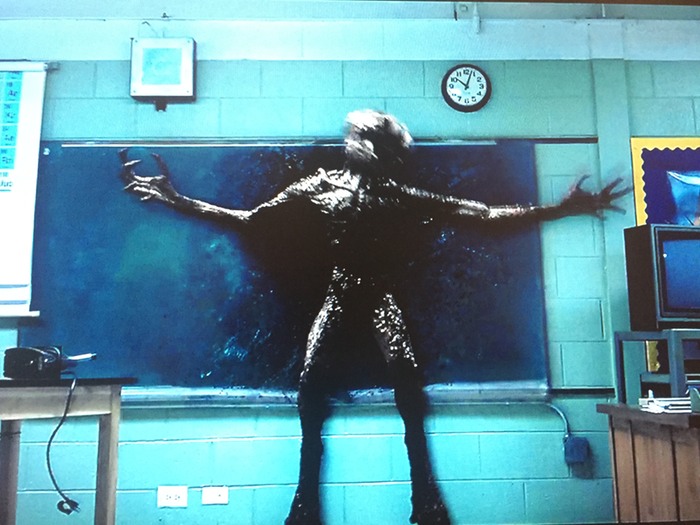
After finishing the first season of Stranger Things (2016-) on Netflix, I was impressed with the stylish homages to 1980s films from Spielberg (Poltergeist, E.T., Jaws, Close Encounters, etc.) and John Carpenter (Halloween, The Thing, etc.) (among others), as well as the novels of Stephen King. We see overt references to Cujo in one scene, and the logo broaches Christine. State Trooper O'Bannons name also references Alien, written by Dan O'Bannon, and Chief Hooper's name broaches Predator. These are just a few of the homages in the series, but they also point to one of the touch points for horror--monstrous nature. Much of Stranger Things draws on skeptical views of science found in horror and sci fi films, highlighting a mad scientist and monster created by his flawed experiments. The wooded "Indiana" (shot in Georgia) setting amplifies its themes, especially when the "underneath" space is introduced. These same monstrous nature ideas are explored explicitly in another 1980s film--The Nest (1988)
The Nest explores the possible disastrous consequences of a biological experiment that turns roaches into flesh-eating fiends. The Nest copies Alien (1979) with its focus on the corporate science connection, ultimately leading to the discovery of a queen and her brood hidden deep in a cave outside an idyllic California coastal town. The film serves as a warning against genetic modifications of cockroaches, a transformation that turns bugs into horrifically anthropomorphized monsters. Negative associations with the insects heighten their monstrous qualities as they take center stage from the film’s opening until its closing denouement. These cockroaches are first established as pests that must be eradicated but transform into monsters that may ultimately destroy humanity instead. 
The film opens in the small harbor town of North Port where Sheriff Richard Tarbell’s (Franc Luz) switchboard officer has been getting strange calls about missing animals, calls that are immediately connected to insects when Tarbell finds a cockroach in his coffee at a diner counter. The presence of cockroaches is also reinforced when the librarian reveals that something—mice or insects—has eaten all of the binding out of her library books. The central cockroach drama, however, intertwines with a subplot of the film, a love triangle Tarbell creates between himself and two women, the diner’s owner Lillian (Nancy Morgan) and his previous girlfriend Elizabeth (Lisa Langlois). The reigniting of Tarbell and Elizabeth’s romance begins to solve the mystery broached by the cockroach evidence. When Elizabeth takes a walk toward the hideout of their youth, she finds a “no trespassing” sign labeled “Intec Development.” A German Shepherd’s cries of agony stop her, and when she reaches him, his flesh has been eaten down to the bone. Tarbell investigates and retrieves something that looks like insect droppings on the dog, yet village mayor Elias urges Tarbell to hold off on searching the Intec property for more evidence. He claims Intec is building condominiums to bring revenue to the island. 
The Nest also constructs scientists as monsters when Intec sends an entomologist, Dr. Morgan Hubbard (Terri Treas), to the island to examine the devoured dog. Dr. Morgan serves as a typical representative of the inhuman and perhaps “mad” scientist seen in most classic monster movies. Dr. Hubbard’s response to these incidents emphasizes the negative portrait of science and scientists in the film. Instead of the fear felt by the rest of the community, Dr. Hubbard seems enamored by the roaches and explicitly anthropomorphizes them. For example, when the cockroaches attack a trapped cat, she exclaims, “very brave, very strange creatures,” a point emphasized by the few predators that can threaten the cockroach. These strengths add to the town’s danger but also draw on cockroach mythology. 
Because they have been genetically modified in an Intec lab, the roaches have developed new powers, more concretely illustrating human and god-like qualities associated with them. Because she has produced them, Dr. Hubbard embraces these new superior but deadly qualities, naming them nymph cockroaches. She lauds their ability to reproduce without the contributions of male counterparts, but when she puts her gloved hand near them in a large lab container, they quickly bite it, highlighting their move from human prey to predator. As a “mad” scientist, however, she seems sexually excited by the mangling of her hand, refusing to remove it until Elias pulls it out before the roaches devour it. Despite these warning signs, Dr. Hubbard tells Elias she can control the roaches and asks for twenty-four hours to solve the problem. 
Beth’s examination of Elias’s papers begins to reveal the truth about these cockroaches’ genetic alteration. Instead of condos, Intec has built a research facility where, according to Hubbard, her experiments are benevolent rather than destructive and meant to create cockroaches that will destroy all other roaches and then die without reproducing. Instead the cockroaches have grown so powerful that even a lethal pesticide can’t destroy them. A solution arises when they realize the roaches have become social animals and must have a nest and a queen to guide them.
The final sinister scenes of the movie emphasize a possible solution to the horror of this now monstrous nature. As Beth explains, if they destroy the caves, they will destroy the nest, suggesting that if they destroy the horror setting, the monstrous insect horror will also disappear. The roaches all go toward the queen in the caves like “a collective unconscious,” making an overt connection to an anthropomorphized cockroach mythology. In the cave where the nest is hidden, Dr. Hubbard is destroyed by a roach figure built out of multiple human skeletons. Tarbell and Beth escape the cave before it explodes, and the two kiss, an ending that perhaps satisfactorily resolves the insect conflict in the film but leaves gaps in the love triangle connecting with it. In The Nest, both science and the cockroach become monstrous, but only the bugs and the mad scientist die, perhaps signifying the need to destroy our worst selves. In Stranger Things, science also destroys.