Monday, April 18, 2022

Louisiana Story and Oil Myths


After this long segment demonstrating the process of oil drilling, however, a scene in Louisiana Story shifts back to the boy and his raccoon in the bayou and, in a long sequence, highlights a battle between elements of nature. The boy leaves his raccoon and examines eggs left by an alligator. When the gator comes back on shore, the boy and we see the ‘gator eggs hatch. The boy holds a baby gator until the mother gator roars, and the boy runs away. The raccoon is now loose and swims up on a log, but the gator is close behind. The boy searches for his pet and passes representatives of wild nature: a spider in a web, a rabbit, a skunk, singing birds, and a deer. 


When he sees the broken line on the boat and realizes the coon has escaped, he fears the gator has killed the coon. In a parallel to the boy’s fears, the gator devours a water bird, so the boy sets a gator trap to avenge his friend’s death. His attempts fail alone, however, but his father has been searching for him and helps him out of the water, telling him, “We’ll get him.” Together they kill the alligator, it seems. Although we do not see the actual slaughter, we assume it occurs because father and son visit the oilrig and bring the gator’s skin to show the drillers on board, holding it up for them to admire from their rowboat. 


This resolution of the battle between human and nonhuman nature is paralleled on the rig with a battle between humans and elements of culture when one of the oilmen, Tom, tests oil levels. Father kids him about never finding oil, while the boy fishes from the platform, and his father sets traps for game. We hear a rushing sound and see water spurting over machinery—a blowout that illustrates a battle between human and nonhuman culture in the context of Louisiana Story. The boy runs and father watches water spurt up the rig. It is gas and salt water, according to a newspaper headline, so the well must be capped using a blowout preventer. This initial drilling has failed, just as the boy’s attempts the kill the alligator were thwarted.

Monday, April 11, 2022

Louisiana Story and the question of Oil and Water


 Although based in fantasy rather than reality, evidence in Louisiana Story suggests that nature and culture can and must remain separated. The oilmen, representing culture, leave the rustic cabin in their speedboat. Later the boy and his raccoon, representing nature, watch the oilmen from their rowboat as the drillers prepare to build their rig and platform. The boy fishes while Cajuns hunt along a pristine shore, further connecting them to the natural world. We get a view of homes on the shore from a houseboat, and a shore view of the motorboat and its wake. The boy and raccoon continue watching, and the wake of the motorboat throws him out of his boat, so he is literally connected with the natural world. 


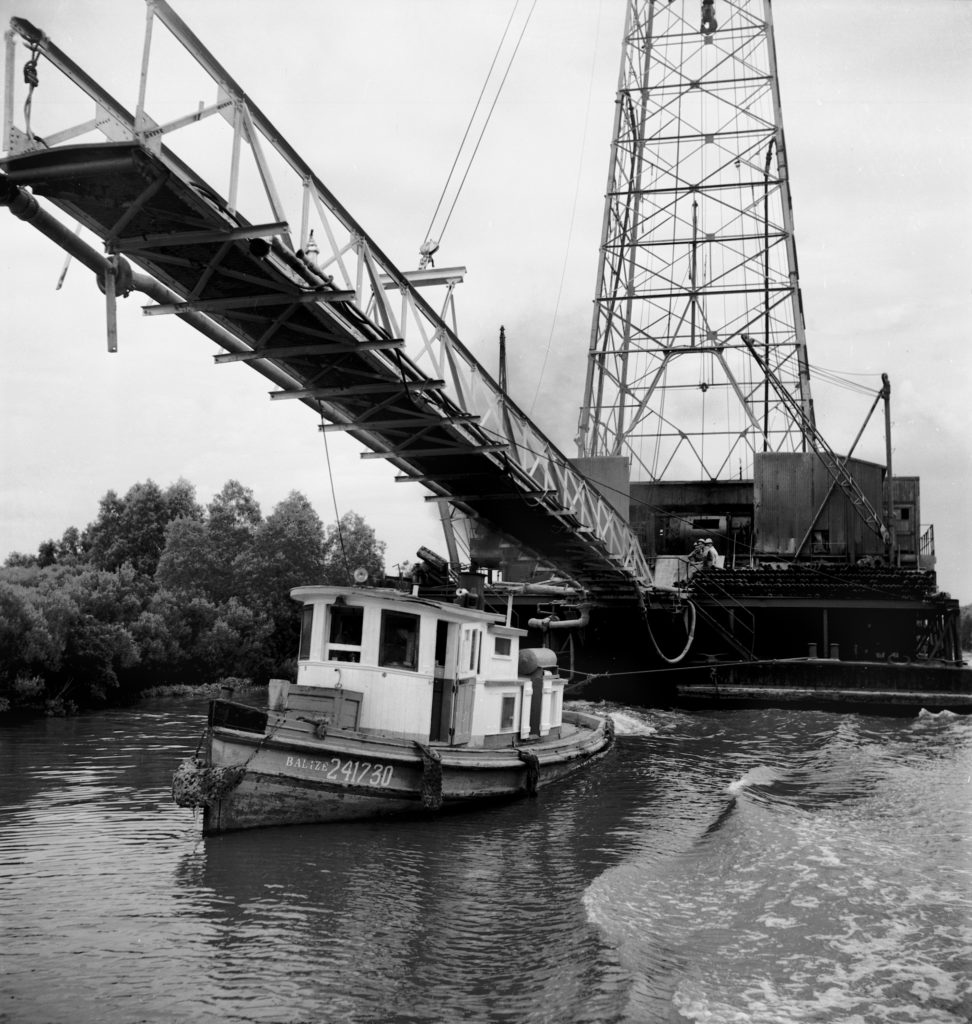
But the boy seems fascinated with the elements of culture brought by the oilmen and watches a man survey the area and a tall rig rolling up the bayou to the spot the surveyor has indicated. The boy and his raccoon watch this modern scene from the safety of nature—the waters and fecund grasses of the bayou. They remain innocent, smiling as they observe without relinquishing their connection with the natural world. The rig contrasts with the natural scene around it, maintaining its separation from the natural world. 


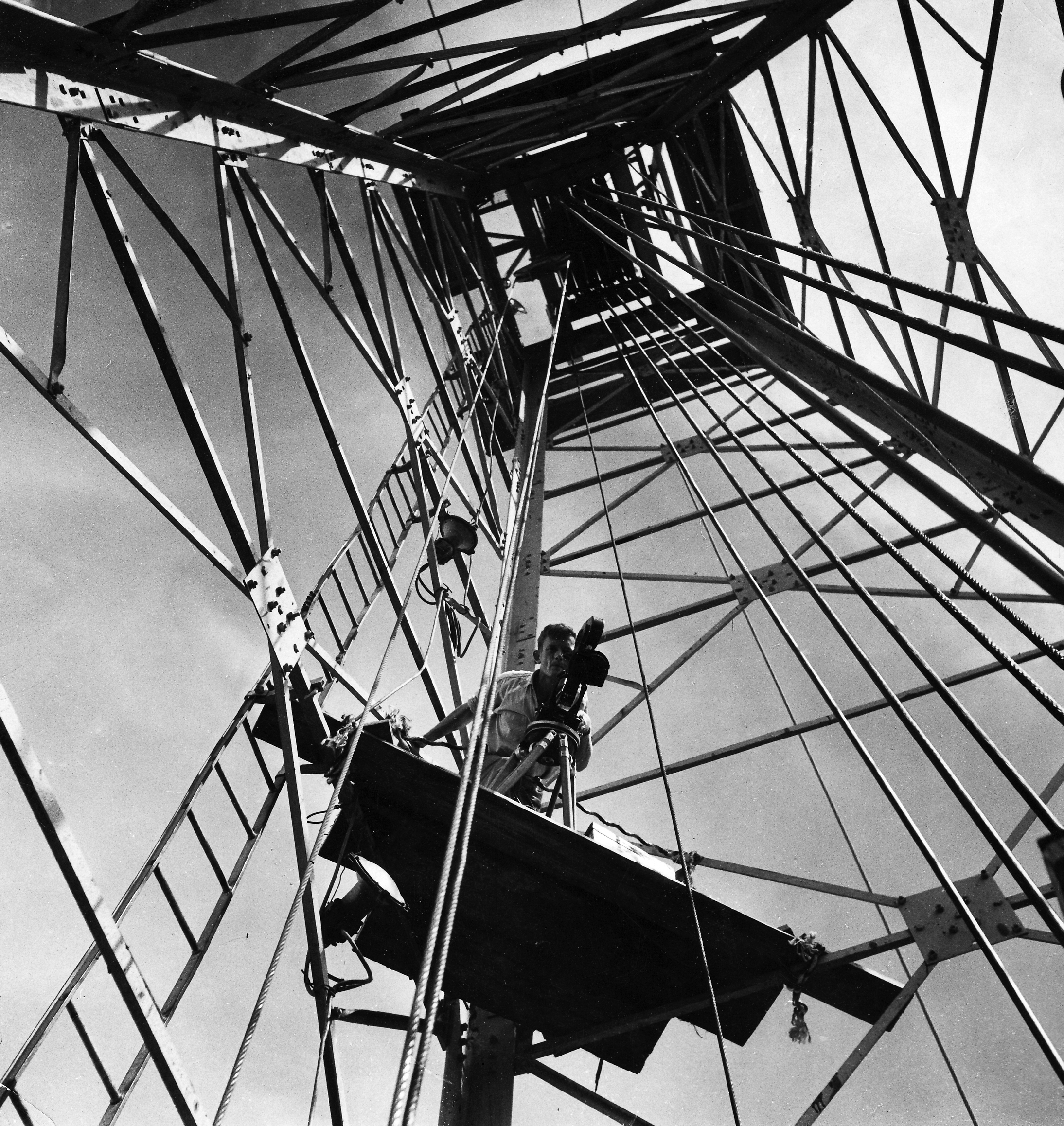
The technology of the rig and the oil drilling it represents become a beautiful and powerful opposition to the peaceful bayou. Steam surrounds the rig, and we hear the pumping sounds of the drill. Although the boy talks to a couple of oilmen and asks what they are doing, he does not board the rig when invited. Instead, he paddles away, reinforcing his separation, and watching from his boat as the long drill comes out of the well, so worn down, the drillers must replace it. A sunset over the bayou further separates the mechanization of oil drilling from the natural scene, which the boy and his boat both envelop and represent. 


The separation between culture and nature continues even after the boy boards the rig for a closer look. The film shows the whole process of preparing the drill before the boy goes on board to see for himself. The rig is loud as chains swing around pipes to tighten and loosen connections. We cannot hear the boy and oilman’s conversation but see them smile, suggesting a connection between them and, consequently, a connection between culture and nature beyond the economic vision of ecology supported by the film’s narrative.

Monday, April 4, 2022

Myth of Separation between Oil and Nature


Despite clear evidence that oil drilling cannot leave the water and land around it untouched, the film and its reviewers assert the opposite, demonstrating through the experience of oil drillers and a Cajun boy that human and nonhuman nature can maintain separate existences and thrive. Instead of emphasizing the interdependent relationship between humans and the natural world, Louisiana Story suggests that to maintain the innocence of nature in the bayou, and of its more natural Cajun inhabitants, a humanity more aligned with culture and technology must leave wild nature behind, entering it only briefly and with caution to avoid an indelible affect. Two myths are perpetuated by the film, then: the myth that oil drilling can leave a natural setting untouched, and the myth that humans are somehow separate from nature rather than interconnected with it. 


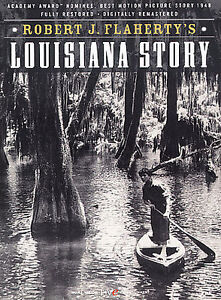
Louisiana Story perpetuates these two myths through both its aesthetic and its narrative. Close-ups of a pristine bayou open Louisiana Story. Flowers, an alligator, and a heron on an evergreen tree emphasize the film’s naturalistic setting. A lone boy poles through weeping cypress trees in a small boat. We see the bayou from his point of view, including water below him. A narrator describes the scene, even mentioning werewolves to set the mythic tone of this innocent scene. The boy wears salt on his waist and something inside his shirt to protect him from all that bubbles, we are told and smiles at a raccoon in a tree, connecting him to both natural and supernatural elements. A snake, gators, and grasses blowing in the wind continue the scene. 


When the boy shoots at an animal, and the pristine scene is disrupted, the conflicting element in the film is introduced: modernism in the shape of oil drilling in the bayou. Other explosions take the gunshot’s place, then, as wheeled machinery drive up into the bayou. The machine looks like a tractor, a cultivator cutting a path through the grass. The boy floats away, demonstrating the separation between culture and nature the film perpetuates. 


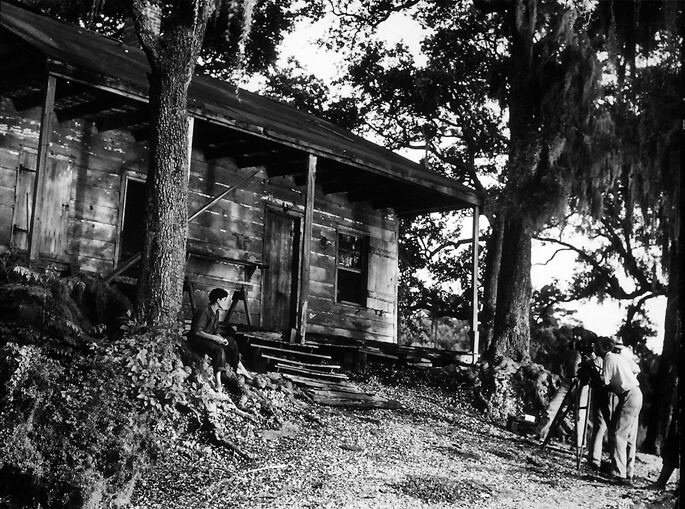
The boy and his Cajun family represent an innocence that is untouched by civilization. When the boy heads home to his Cajun family, a family structure more in touch with the natural world is introduced. Their cabin sits beside the bayou and can only be accessed by boat. Inside the cabin, the boy’s father talks about “gators” in a Cajun accent to a lean cut younger man, reinforcing his connection to nature. The boy’s mother does offer coffee, a connection with culture, but the boy’s entrance by boat at his parent’s dock again highlights how isolated this family is from society. 

The blasting that continues, however, contrasts and conflicts with this innocent, more “natural” scene, highlighting the intervention on display. Modern culture has entered the pristine wilderness of the bayou and infiltrated the innocent Cajun family that is still tied to the natural world. To seal this connection, the oil drillers offer lease agreements to the boy’s father: “Can that thing really tell where oil is?” the older man asks, but he signs his name to a contract.

Monday, March 28, 2022

Louisiana Story and Separation Between Humans and the Natural World: Reviewers' Take


Contemporaneous reviews of the film support the claim that the film’s source of financing does not detract from its success as a work of art. Bosley Crowther of The New York Times asserts that the film “is not a submissive nod” to technology; yet, “it is recognition that the machine can be a useful friend of man, no more rapacious, in some way, than primitive man or nature themselves.” Crowther declares the scenes highlighting the oil drilling operation “the most powerful and truly eloquent phases” of Louisiana Story. Despite the sympathetic portrayal of the oil drillers, however, Crowther doubts money supplied by Standard Oil encouraged Flaherty’s perspective. Instead, Crowther asserts, “the ring of sincerity is clear in Flaherty’s film.” 


Variety calls the film “a documentary-type story told almost purely in camera terms.” The Variety review mentions that Standard Oil of New Jersey funded the production only in passing, asserting instead that Louisiana Story “has a slender, appealing story, moments of agonizing suspense, vivid atmosphere and superlative photography.” Instead of valorizing either the Cajuns or the oil drillers, the review suggests that “there are no real heroes or villains” in the film. According to Variety, “the simple Cajun family is friendly, and the oil-drilling crew is pleasant and likable.” The stylistic choices deserve the most kudos, the review asserts, with “long sequences being told by the camera, with eloquent sound effects and Virgil Thomson’s expressive music in the background” rather than through concentrated dialogue-driven scenes. 


None of these contemporaneous reviews suggest that financing by Standard Oil in any way skewed the rhetoric of Louisiana Story, even though the offshore drilling on display here is shown from the perspective of a Cajun boy. Instead, the reviews and biographical overviews of the film agree with and substantiate the message on display in the film: offshore oil drilling, even in a fragile bayou, will have no affect on the pristine wild nature around a well or on the innocent Cajuns who are enriched by mineral rights contracts and lease payments received from the drilling company, a company that enters the bayou and then all but disappears by the end of the film.

Monday, March 21, 2022

Louisiana Story and Separation Between Humans and the Natural World: The Standard Oil Connection


The support for oil drilling and its benefits illustrated in Louisiana Story should come as no surprise because the Standard Oil Company financed the film. In his biography of Robert Flaherty, The Innocent Eye, Arthur Calder-Marshall asserts that Standard Oil began negotiating with Flaherty as early as 1944 for “a film dramatizing to the public the risk and difficulties of getting oil from beneath the earth” (211). 


Roy Stryker, Standard Oil’s public relations officer in New Jersey, suggested that “Flaherty would produce an idea, not yet perceived, which would discover in the romance of oil-drilling a theme so compelling that it would play the commercial theatres” (211). In The World of Robert Flaherty, biographer Richard Griffith associates Standard Oil’s choice of Flaherty to direct their public relations film with the success of Nanook of the North, which had also been sponsored by a commercial company and “hailed as a classic with no complaint from anyone that its finances might be tainted” (148). 


In her biography of her husband, Frances Hubbard Flaherty takes this relationship between Flaherty and Standard Oil further, claiming that Standard Oil commissioned Flaherty despite a cynical response from a film industry that saw Flaherty as a free-lance filmmaker without the professional resources to support a film project of this size. 


According to Frances Flaherty, instead of the superficial films Hollywood produced, Standard Oil wanted “a classic, a permanent and artistic record of the contribution which the oil industry has made to civilization” presented “with the dignity and epic sweep it deserved and assure this story a lasting place on the highest plane of literature of the screen” (quoted in Flaherty 34). All of these biographical sources suggest that Flaherty has created an art piece that, as did Nanook of the North, transcends its corporate funding.

Monday, March 14, 2022

Approaches to Progress and Ecology in Louisiana Story and Thunder Bay


Although both films connect the oil industry with the environment, Robert Flaherty's Louisiana Story (1948) and Anthony Mann's Thunder Bay (1953) illustrate differing visions of oil drilling, visions that draw on conflicting views of both progress and ecology. Whereas Louisiana Story advocates for a progressivist vision of progress in which corporate “big guys” rather than local “innocent” Cajuns successfully reap the benefits of modernization and an economic or “fair use” approach to ecology, Thunder Bay demonstrates a populist view of progress and an organismic or “wise use” approach to ecology. Yet both films’ representations rest on fabricated American myths, which fall flat under scrutiny. 


Louisiana Story’s progressivist perspective connects Cajuns to the natural world around them in the film. In reality, it exploits them and their land, an exploitation that demonstrates the negative consequences of economic and fair use approaches to ecology. Economic consequences affect both locals and their environment in a series of negative externalities, once again made blatant after the Deepwater Horizon disaster sixty-two years later. 


Thunder Bay’s populist presentation of progress and organismic or wise use approaches to ecology seem like more viable choices for both local shrimpers and their environment. But those visions also break down in the face of the negative externalities ever present during offshore oil drilling. Although the film suggests shrimpers and oil drillers can build and maintain interdependent relationships that serve them both economically while preserving the sea and its marine life, suggesting the possibility of sustainable development in the gulf, those claims are all based in fiction (myth) rather than fact (reality).

Monday, March 7, 2022

Oil Films and/or Interdependence


Filmic representations following Kerr-McGee’s success draw on a drive to minimize the conflict between the fishing and oil industries and valorize oil drilling and the opportunities it brings. Both Robert Flaherty’s Louisiana Story (1948) and Anthony Mann’s Thunder Bay (1953), for example, commend the oil industry for bringing wealth to an otherwise impoverished region, with differing levels of interdependence between local residents and oil company outsiders on display. 


Whereas Louisiana Story makes the case that an oil company can build its rig, drill for oil, build a pipeline and disappear, leaving the bayou untouched and the Cajuns around the well a little richer, Thunder Bay asserts that oil drillers and shrimpers can work together. In fact, in Thunder Bay, oil drilling provides more than jobs and money, according to the film. It provides access to “the golden shrimp” fishermen have been seeking for generations, stimulating a more productive shrimp season. 


As a testament to a continuation of this vision of interdependence, Dead Ahead: The Exxon Valdez Disaster (1992), Black Wave: The Legacy of the Exxon Valdez (2009), and Crude (2009) draw on this same mythology, asserting that the oil and fishing industries can work interdependently once appropriate safety precautions are in place.