Wednesday, May 10, 2017

Warm Bodies (2013) and Comic Evolutionary Narratives


Some comic eco-disaster films highlight a comic evolutionary narrative that builds on the 
goals of the comic eco-hero. According to Joseph Meeker, these evolutionary narratives 
explore what might happen if humanity did learn from these more stable comic heroes, 
since, as Meeker explains, “Evolution itself is a gigantic comic drama, not the bloody tragic 
spectacle imagined by the sentimental humanists of early Darwinism” (164). Rather, the 
evolutionary process is one of adaptation and accommodation, with the various species 
exploring opportunistically their environments in search of a means to maintain their 
existence. Like comedy, evolution is a matter of muddling through.” (164). The zombie 
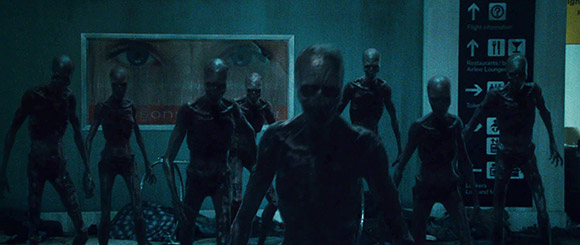
romantic comedy Warm Bodies (2013) begins to illustrate this comic eco-narrative.


Directed by Jonathan Levine, Warm Bodies narrates a comic evolutionary narrative catalyzed 
by the love between “youthful” zombie R (played by Nicholas Hoult) and young human 
Julie (played by Teresa Palmer). Their story illustrates Joseph Meeker’s description of the 
comic way argung that participants are successful because “they live and reproduce even 
when times are hard or dangerous” rather than proving themselves “best able to destroy 
enemies or competitors” (The Comedy of Survival 20).


Although some critics take issue with how well, as Kevin Jagernauth states in a Playlist review,
 the film “create[s] new rules” for zombie/human interaction, we assert that in Warm Bodies, 
both humans and zombies choose cooperation, accommodation, and adaptation instead of 
destruction and succeeds as an alternative narrative in which both humans and zombies 
survive. Beginning with an opening that highlights one of the elements that separates the 
film from other zombie movies (R’s zombie point of view), the film emphasizes R’s 
cognitive abilities and desire to be human, a desire that ultimately contributes to the “new 
story” R and Julie begin. 


The comic eco-narrative resolves when zombies and humans join together to defeat 
“bonies,” zombies who “give up,” “lose all hope,” and shed their human qualities, including 
their skin. As R explains, On the one had, getting shot in the chest hurt, like a lot, but on 
the other, it felt good to bleed. To feel pain. To feel love. I wish I could say we killed the 
bonies with love, but really we just straight up killed them all … That sounds kind of 
messed up, but they were too far gone to change. It was a good bonding experience for us 
and the humans. After we joined forces they didn’t have a chance.” A new day dawns after 
the battles end, and a montage of scenes show zombies becoming more human, and 
humans becoming more accepting, more accommodating. 


Comedic films like Warm Bodies are a complex form of cultural expression, which have a history of both 
perpetuating the social order and attempting to subvert it. Comedies are a way to demonstrate the 
absurdity of society’s problems and hypocrisies. But films like the one touched on here may also provide 
a space in which we can laugh at eco-disasters, look at environmental catastrophe with a sense of humor 
and, perhaps, make changes that will serve both humans and the natural world best.

Friday, April 28, 2017

The Comic Eco-Hero Across Sub-Genres


Comic Eco-Disaster films sometimes highlight comic eco-heroes that respond to the heroic motifs of tragedy by comically constructing the characters of drama to serve both a comic purpose and a satirical premise and plot. In an eco-comedy, heroes with more than one tragic flaw are fore-grounded. According to Joseph W. Meeker’s The Comedy of Survival, heroes in comedies tend to bumble and require a community of allies to succeed. Eco-comedies as diverse as Tank Girl (1995), Rango (2010), and the current Attack the Block (2011) demonstrate this move from tragedy to comic hero in the eco-disaster genre.  


Directed by Rachel Talalay, Tank Girl centers on a comic and communal fight against the tyranny of a mega-corporation Water and Power that dominates future Earth’s remaining drinkable water supply. In the post-apocalyptic setting of the film, water is under the thumb of Water and Power’s CEO Kesslee (played by Malcolm McDowell,) the over the top villain at its head. 


His demise is only possible when comic eco-hero Rebecca (Lori Petty), aka "Tank Girl” joins forces with a ragtag team that includes ill-treated pilot Jet Girl (played by Naomi Watts) and a band of genetically modified “Rippers” led by T-Saint (played by Ice-T). Together they defeat" Kesslee and distribute water equally among Earth’s survivors. Reviewer James Berardinelli calls Tank Girl “a high-spirited, madcap example of film making run amok.” Despite its many weaknesses, Tank Girl highlights the strengths of a comic eco-hero, who places the good of the community above the individual.


In an obvious homage to Chinatown noted by critics from Time Magazine to Salon.Com, Rango (directed by Gore Verbinski) also explores water rights issues. In Rango comic eco-hero (and chameleon played by Johnny Depp) attempts to “save a parched Old West-style town [of Dirt] from the depredations of water barons and developers” (O’Hehir “Rango and the Rise of Kidult-Oriented Animation”). In fact, the mayor of Dirt (Ned Beatty), the Western town Rango must civilize, modeled his performance on that of John Huston in Chinatown. With help from a variety of anthropomorphized western characters, Rango (Johnny Depp) successfully returns water to the desert, defeating the water baron mayor (Ned Beatty) and rehabilitating his henchman, Rattlesnake Jake (Bill Nighy), an obvious homage to Lee Van Cleef’s characters in his Western Films.      


The film’s homage to the Western and its typically desert-like setting amplify Rango as satire, parody, and platform for a comic eco-hero. As Roger Ebert asserts, “Beneath its comic level is a sound foundation based on innumerable classic Westerns, in which (a) the new man arrives in town, (2) he confronts the local villain, and (3) he faces a test of his heroism. Dirt has not only snakes but also vultures to contend with, so Rango's hands are full. And then there's the matter of the water crisis. For some reason, reaching back to the ancient tradition of cartoons about people crawling through the desert, thirst is always a successful subject for animation.” Homages to a variety of Westerns reinforce this connection, but the references to Spaghetti Westerns, especially, amplify Rango’s unlikely comic eco-heroic persona. The Spirit of the West (Timothy Olyphant) character, for example, is modeled after Clint Eastwood’s Western roles. Rango’s historical narrative, however, is also connected with the contemporary world and highlights more current issues surrounding water rights.


Directed by Joe Cornish, Attack the Block (2011) follows a teen gang and its comic eco-hero Moses (played by John Boyega, who later played Finn in Star Wars: The Force Awakens) as they defend their South London housing project “block” from an alien invasion on Guy Fawkes bonfire night. But the film takes this genre further by including a focus on comic eco-heroes and at least two intersections between humans and the urban environment in which they live: an exploration of the impact of a “lifeless” urban environment on children and young adults, and an alien attack explicitly connected with the natural world that motivates them to take communal and comic action. Attack the Block begins to interrogate these issues by setting a typical science fiction narrative in a low-income urban housing project.


Moses and his unlikely gang that includes nurse Sam, teens on the block with names like Pest, and Dimples, and pot growers Brewis (played by Luke Treadaway) and Ron (played by Nick Frost) have a fierce loyalty for their “block” and wish to defend it. As a comic eco-hero, Moses must lead the fight based on a second connection with the natural world explored in the film:  feminine pheromones as a motivation for the aliens’ attack. Pheromones are introduced in the film when nerdish pot smoker, Brewis watches a nature program that explains how moths are drawn to their future mates’ pheromones. The message makes sense later, when Brewis notices a luminescent liquid on Moses’ jacket and connects it with the program According to Brewis, “whatever it is, you're covered in it and it seems to be piquing the interest of a rather hostile alien species. I'm just saying... maybe if you took those clothes off, they wouldn't know we're here.” And, Moses, true to his name, leads the aliens away from his friends. As an urban comic eco-film, Attack the Block also illustrates the power of the comic eco-hero, who uses community as a tool to overcome environmental racism and injustice.


This year’s comic-horror hit Get Out from Jordan Peele continues this tradition, with comic hero Chris Washington (played by Daniel Kaluuya) foiling a racist mad scientist plot with help from buddy Rod (played by LilRel Howery). Get Out powerfully interrogates race relations satirically. But it also condemns the Armitage family’s attempts to mess with nature. I don’t want to spoil the plot, but I did hear an Italian neuro-surgeon plans to perform the first head transplant (Newsweek).